
Commodore Callback: at last, the phone I was waiting for?
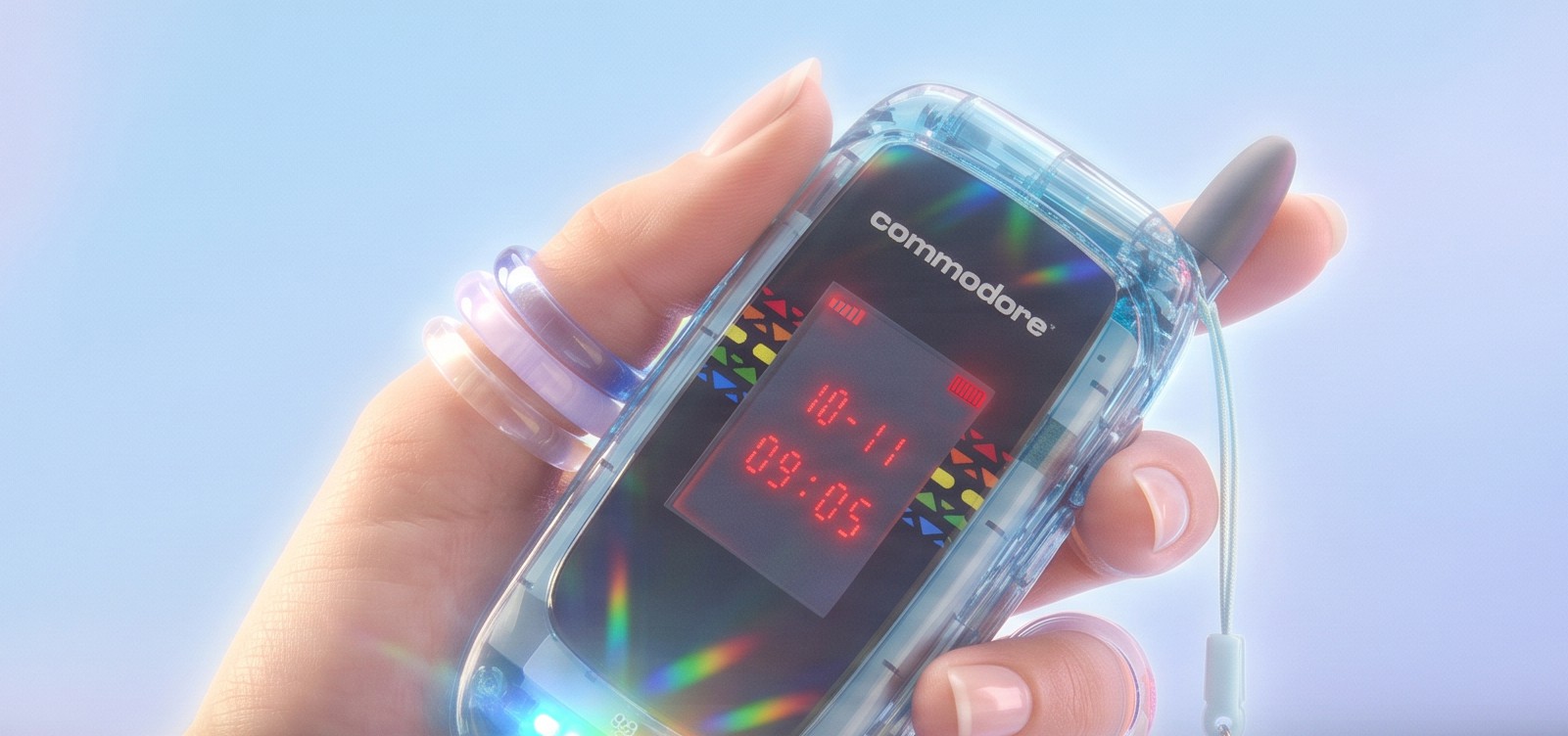
A few days ago, I discovered this piece of news, and it immediately caught my attention. On June 16th, Commodore officially announced a new product: Commodore Announces Callback 8020, the Mobile Phone That Helps You Disconnect
They are making a phone. Not a smartphone, but a good old flip phone, a feature phone, or a dumbphone as we know them nowadays (even if this one doesn’t seem that dumb).
It’s maybe the phone I’ve been desperately looking for, these past years.
A brief history of me and my phones
Before explaining why the Commodore Callback might be the phone I was always looking for, here is a retrospective of all the mobile phones I owned, from the first in 1999 until my current one in 2026.
Let’s cut these 27 years (!) in two distinct periods: before and after smartphones.
Note: phones are not represented to scale.
The pre-smartphone era
From 1999 to 2009, from left to right and top to bottom:
- Sagem Sanaga
- Panasonic GD90
- Panasonic GD93
- Sony Ericsson T68i
- Sharp GX25
- Sony Ericsson W810i
- Sharp 923SH
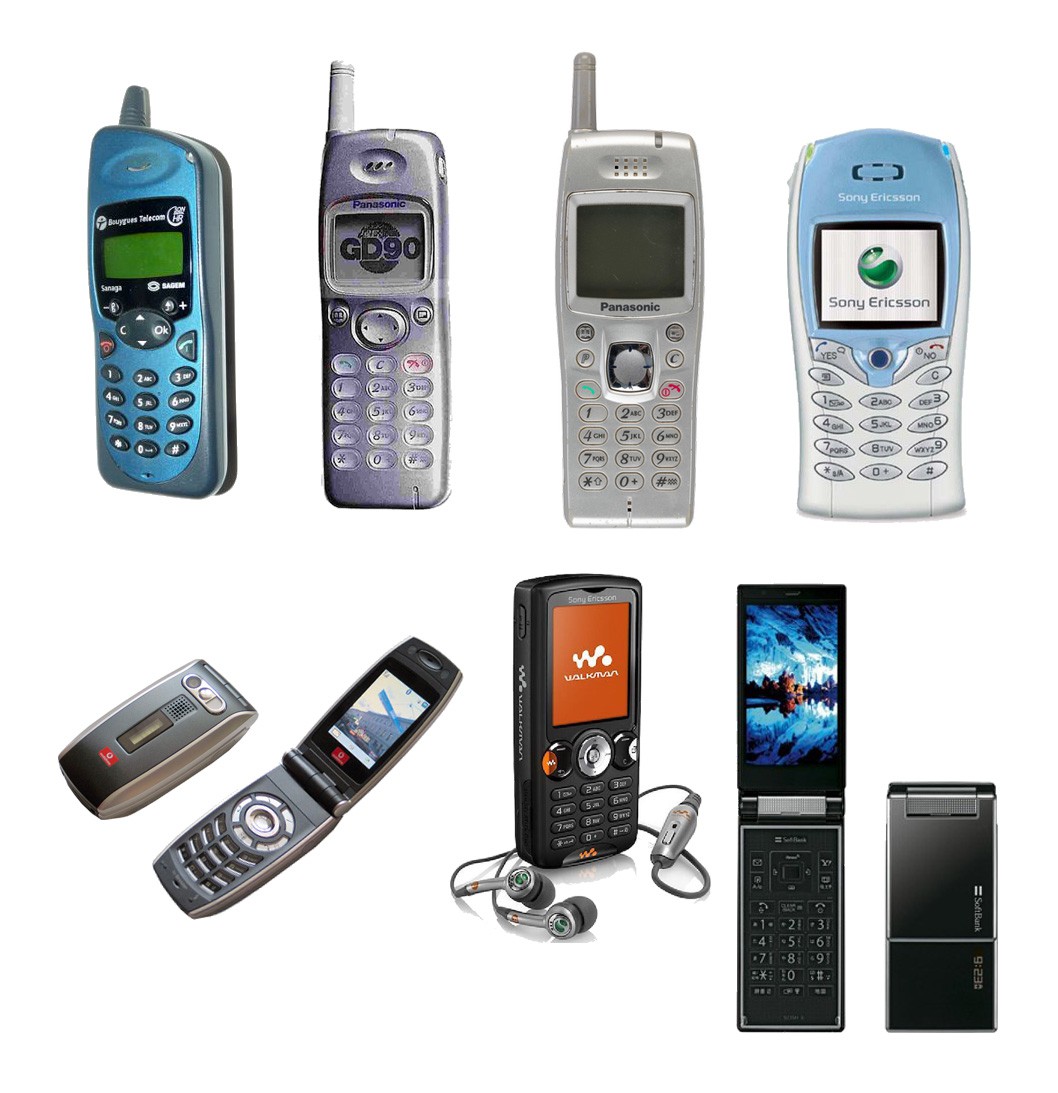
Among these phones, my favourite one was the Sharp GX25. It was my first flip phone, and I loved its design, its sturdiness, and how it felt in the hand. I still remember the small and crispy clicks I could hear, while folding or unfolding it. I liked the fact that despite the screen being hidden while folded, I was able to access basic information thanks to the small LCD screen and LED on its external face.
From my first smartphone to this day
From 2010 to 2026, still from left to right and top to bottom:
- iPhone 3GS
- Google Nexus 4
- LG G3
- iPhone 6S
- iPhone XS
- iPhone 13 Pro (current one since 2022)
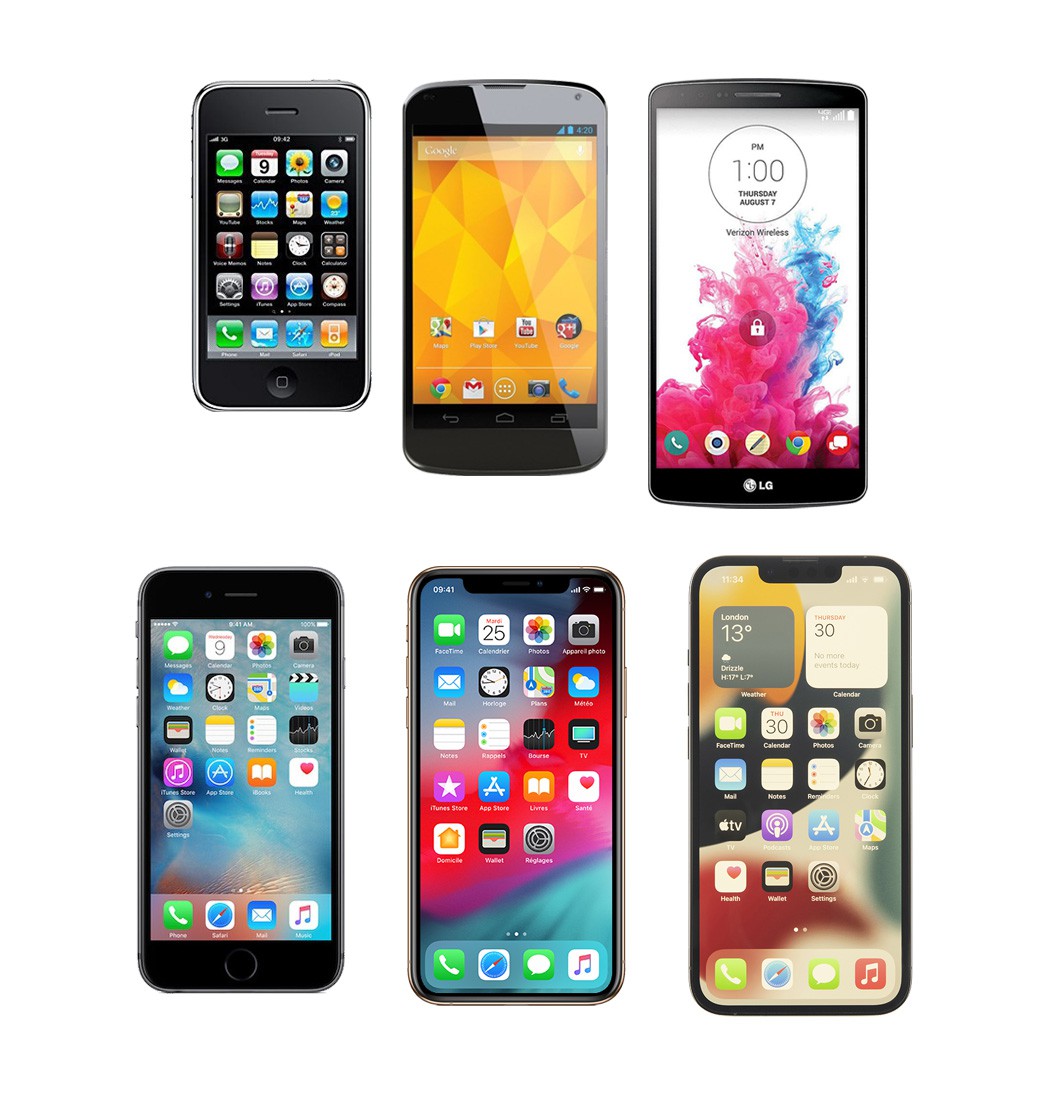
A brief transition to Android, just to try it out, which didn’t convince me back then, and was far less practical, as I also owned an Apple computer (I still do).
My favourite one was probably the iPhone XS, which I found both simple and elegant, with a decent size. I kept it only for three years, due to a stupid and unfortunate incident.
The first thing that is obviously eye-catching, when I compare these two periods, is the diversity and creativity that can be found during the pre-smartphone era, both in terms of hardware and software. And yet, it’s just a glimpse of what was available at this time.
Since the smartphone democratisation, all the phones look alike: boring shiny black glass blocks, that automatically turn bright when taken out of a pocket, to display more or less the same type of touchscreen interface.
The smartphone trap
Besides this lack of originality, smartphones, combined with the appearance and democratisation of social networks, have caused negative, even deleterious, side effects in our habits and even in our brains.
Despite their revolutionary and practical aspect, which I am absolutely not denying, smartphones ended up being with us anywhere and anytime, wiping out, along the way, the last bits of downtime we used to allow ourselves. We now automatically whip out our smartphone at every opportunity: to kill time, respond to some request, read a notification… and inevitably deep dive into the limbo of social networks and the dozens of applications we open and close mechanically.
Algorithms dictate their law. They soak us with poor content, nowadays with AI slop. Our brains are manipulated, our behaviours and habits influenced, and many of us spend hours a day on phones. Sometimes more than half the 24 hours there are in a day.
Consequence: our attention span has collapsed. We can’t focus anymore on one task at a time, we can’t read a book or watch a film. We no longer give time to boredom and daydreaming, and therefore to thinking.
Needless to say, I wasn’t spared from this situation. And yet, I’ve always had my phone with almost all notifications turned off and constantly in silent mode.
I started to realise something was wrong with me a few years ago, mainly because I had lost my taste for reading. Or rather, I couldn’t focus on a book anymore. I also felt a kind of digital fatigue, and was starting to be really fed up with social networks.
So, what to do?
I started to do some research about all of that, and I quickly found out about the “dumbphone” movement, which, as opposed to the “smartphone”, tries to restore the reputation of 2000s feature phones, and their basic yet sufficient functionalities, which wouldn’t monopolise our brain time and its proper working, as smartphones do.
It didn’t take a long time for me to be seduced by this “dumbphone” idea. Moreover, it was also satisfying my nostalgic side, and I could already picture myself with a flip phone in hand, like in 2005.
In search of the ideal dumbphone
Without thinking twice, I started looking for the perfect dumb (and flip!) phone.
That’s when I realised that, despite all that fresh excitement, there were some constraints I had to tackle when thinking about switching to a dumbphone.
Indeed, nowadays, our smartphones are so well implemented and grafted to our daily lives that they have become almost essential, both for personal and professional matters.
For example, I need my smartphone to:
- Approve a bank transfer
- Authenticate on websites and professional software (2FA)
- Scan a QR code
- Pay contactless
- Authenticate on governmental websites, through a special app
- Show a train ticket
- Use a GPS while driving my car
- Pay for the bus/subway entrance
- And so on
Other options may exist (maybe not always, though), but they are less practical and not always easy to set up.
I’m not against using these alternative solutions, on the contrary, but not at any cost. The main goal of switching to a dumbphone was to slow down and simplify my digital life and my relationship with mobile tech in general. Acquiring a dumbphone that would add more constraints and difficulties to my daily life would totally run counter to my goal.
On top of these obstacles is another problem: finding a dumbphone that is compatible with the mobile network where I live: France (and Europe in general).
After a lot of research, lots of dumbphones were tempting but none of them checked all these boxes. So I resigned myself, and decided to take advantage of the phone I already owned, my iPhone 13 Pro.
Turning my smartphone into a dumbphone
It started during summer 2024. I deleted all the apps from my smartphone that I judged useless and time-consuming, the apps that were eroding my attention span without giving me anything in return. Most of them were social networking and messaging apps, from which I only kept WhatsApp. I removed all the icons from the homescreen, turned everything into black and white, with a black background, deactivated all the notifications, except for calls and messages from a few priority contacts.
By the way, my phone interface history is detailed on this page: Homescreens
In the Settings, I blocked all domains from all social networks. So if I want to check them (which is rare), I have to use my computer. Since then, I’ve never felt like I was missing out on anything interesting, probably because 99% of the content isn’t anyway.
For office-related stuff, mostly emails, I still have the apps on my phone, so I can look up and read messages, and also authenticate on some websites. But, even though we live in a “mobile-first” era, I’m part of the “desktop-first” community (if it exists). I prioritise my laptop, finding it far more practical and appropriate, therefore effective, for the majority of tasks other than pure consultation.
I’ve also ditched my streaming services subscriptions, which has helped a lot to reduce the time spent on my phone. See Listening to music the 2000s way and Listening to music the 2000s way: one year later
In the absence of the ideal dumbphone, I chose to focus on balancing digital minimalism with the convenient features of a smartphone.
And it has been like that for the last few years. Until Commodore announced its new product, its modern flip phone.
Enter the Commodore Callback 8020
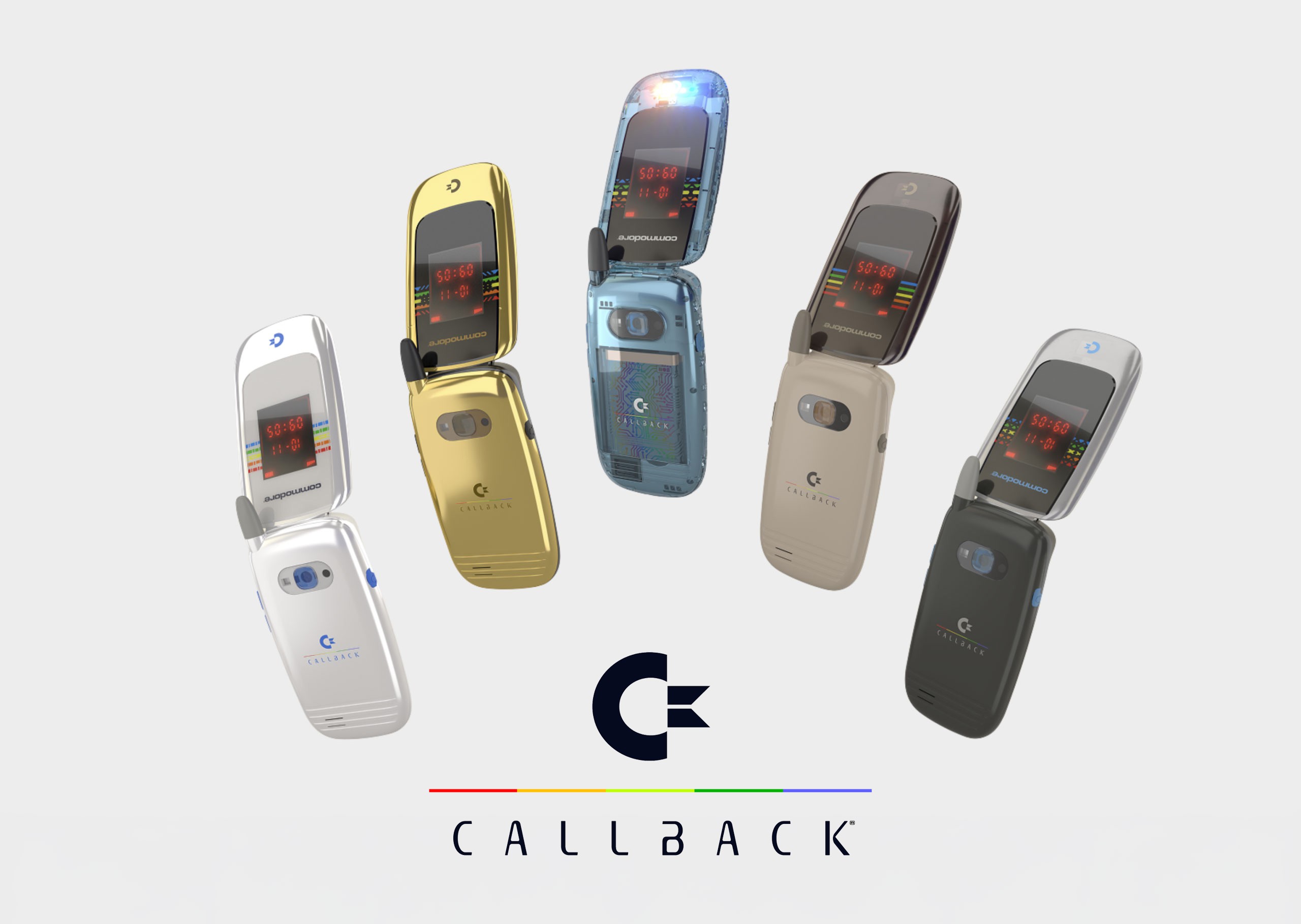
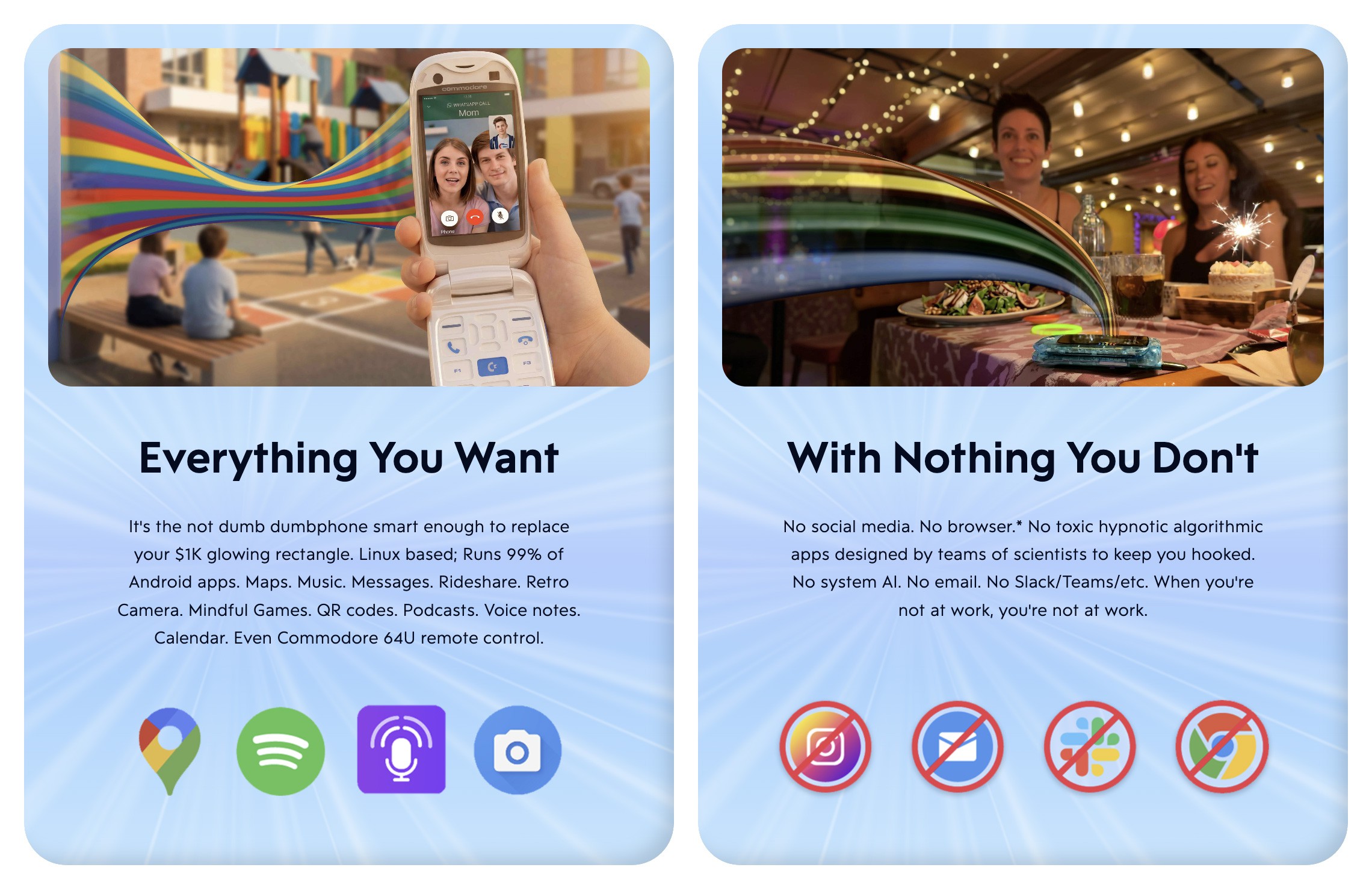
So, what a surprise to stumble upon this announcement from Commodore. The promise is very tempting: a flip phone with functionalities that would allow us to fulfil today’s daily life needs, without monopolising our attention span and our time.
In no particular order, here are a few arguments that convince me:
- Social networks and web browser blocked at a system level
- No email or work apps (Slack, Teams…)
- A 99% announced compatibility with Android apps
- 2FA supported
- 4G, GPS, Wi-Fi, Bluetooth, hotspot
- Worldwide network support
It’s quite radical, but I approve.
To discover all the other features Commodore highlights about the phone, have a look at their product page: Callback 8020: The Future of Flip-Phones
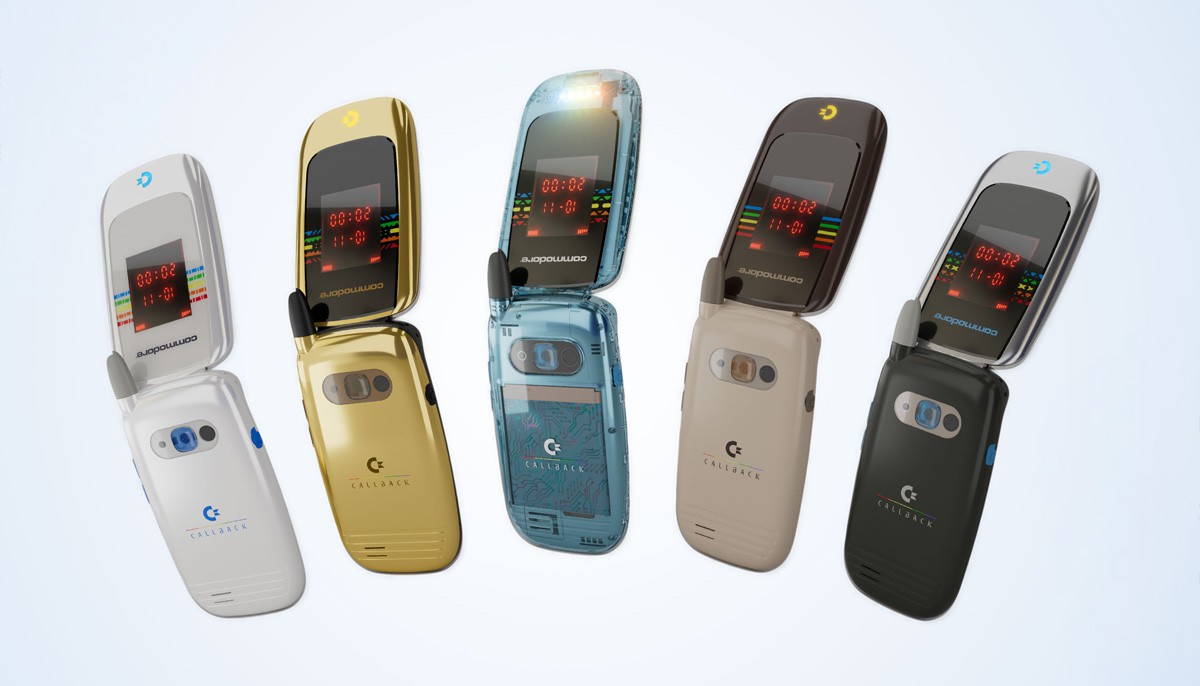
Add to that its gorgeous design, which gives off a sweet 2000s fragrance and comes in several colours: I am totally sold. By the way, I’m torn between the Starlight Edition and the ProtoPET White.
On paper, the Commodore Callback has everything to please me and allows me to finally make the switch. However, I’m not sure it will be fully compatible with all the use cases I listed above, especially the ones related to banking operations and authentication on government websites. It seems that Commodore is aware of certain issues and will work on them to find solutions. The hotspot feature should also allow one to keep a smartphone on hand as a backup, and to use it for these particular needs.
I don’t have any trouble imagining myself using a physical bank card again, printing concert and train tickets, buying and using a bus ticket… I will find alternatives. And on top of that, I think it’s kind of fun and refreshing not to depend on my phone for anything.
Though, I still haven’t taken the plunge to preorder the Commodore Callback. I’m still unsure about it. First, it’s a bit pricey. From France, including customs duties, it would cost me $475.80 (about €420), which is quite a sum. Maybe when it launches on the market, by the end of 2026, there will be European, or even French, sellers that would allow me to avoid some fees. Secondly, I think it might be wiser to wait for the first tests and feedback from French and European users, to see if this lovely flip phone will really fulfil all my needs. I believe in it, anyway.
So, I’ll wait and see. In the meantime, I will continue to content myself with my dumbified iPhone 13 Pro.
Note: images in this article are courtesy of Commodore.